

Causes of False Low Blood Sugar Readings on Continuous Glucose Monitors
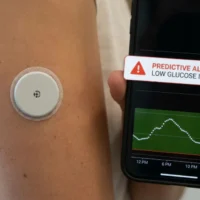 Continuous glucose monitors, or CGMs, have changed the way many people manage diabetes. Instead of requiring frequent finger-stick tests, a CGM uses a small sensor inserted under the skin to measure glucose in interstitial fluid and provide ongoing readings and alerts. For people who rely on those readings to make treatment decisions, accurate information can be extremely important.
But CGM readings are not infallible. A monitor may sometimes display a glucose level that is significantly lower than the person’s actual blood glucose. A false low reading can be confusing and potentially dangerous, particularly when someone takes action based on information that does not accurately reflect their blood sugar.
Several factors can contribute to an unexpectedly low CGM reading. Some are related to the way CGM technology works. Others can result from pressure on the sensor, problems with the sensor itself, interference from medications or other substances, or manufacturing defects, such as has been documented with the Abbott FreeStyle Libre 3 and Libre 3 Plus sensors.
How a Continuous Glucose Monitor Can Show a False Low Reading
A CGM does not directly measure glucose in the bloodstream. Its sensor measures glucose in interstitial fluid, the fluid surrounding cells beneath the skin, and the system uses that information to generate a glucose reading. Because glucose moves between the bloodstream and interstitial fluid, there can be a physiological delay between changes in blood glucose and changes detected by a CGM.
That difference can become more noticeable when glucose levels are changing rapidly. For example, a person’s blood glucose may be rising or falling quickly while the CGM is still reflecting an earlier glucose concentration.
CGM systems also rely on algorithms and signal processing to turn sensor measurements into displayed glucose values. Sensor performance can be affected by factors such as pressure, motion, local blood flow, and certain substances that interfere with the sensor.
As a result, a low number on a CGM does not necessarily mean that the person’s blood glucose is actually that low.
Sleeping on a CGM Sensor Can Cause a False Low Reading
One of the better-known causes of an unexpectedly low CGM reading is sometimes called a compression low or compression artifact.
This can happen when a person places sustained pressure on the sensor, such as by sleeping on the part of the body where the sensor is attached. External pressure can reduce local tissue perfusion around the sensor and temporarily cause the device to report an artificially low glucose value. Compression-related false lows are particularly associated with overnight readings.
A compression low may improve after the pressure is removed. For example, someone who receives an unexpected low-glucose alert while sleeping may discover that the reading changes after moving away from the sensor.
However, not every overnight low is a compression low. An actual drop in blood glucose can occur during sleep, and an unexpectedly low CGM reading should not automatically be dismissed as a sensor problem.
Rapid Changes in Blood Sugar Can Cause the CGM and Blood Meter to Show Different Numbers
Differences between CGM readings and blood glucose measurements can occur when glucose levels are changing rapidly.
Because CGMs measure interstitial glucose rather than blood glucose directly, there can be a delay between what is happening in the bloodstream and what the sensor detects. Clinical guidance recognizes that discrepancies can occur particularly in the hypoglycemic range and when glucose levels are changing quickly.
This means that a CGM and a finger-stick meter may occasionally produce different readings even when both devices are functioning as intended.
The size and significance of the difference can depend on the circumstances. A modest difference during a rapidly changing glucose level is different from a sensor repeatedly reporting a dangerously low reading while a blood glucose meter shows a substantially higher level.
A CGM Sensor Can Malfunction and Cause False Low Readings
A sensor malfunction can cause inaccurate readings, including readings that are falsely low.
CGM sensors are medical devices with small sensing elements, electronic components, software, and manufacturing processes that must work together to produce accurate results. A problem with any part of that system can potentially affect the information provided to the user.
The U.S. Food and Drug Administration has documented a particularly important example involving certain FreeStyle Libre 3 and Libre 3 Plus sensors. In November 2025, Abbott Laboratories initiated a medical device correction after internal testing determined that some sensors could provide incorrect low glucose readings. The FDA published the notice in January 2026.
The FDA’s recall database identifies the reason for the problem as a manufacturing process issue that could cause carbon buildup in the sensor and result in incorrect low glucose results.
That type of problem is fundamentally different from a normal physiological difference between interstitial and blood glucose. It involves the performance of the medical device itself.
What Happened With Certain FreeStyle Libre 3 and Libre 3 Plus Sensors
The FreeStyle Libre 3 and Libre 3 Plus issue demonstrates why an unexpectedly low reading should not automatically be attributed to user error.
According to the FDA, Abbott identified a problem affecting a subset of Libre 3 and Libre 3 Plus sensors. The company determined that certain sensors could provide incorrect low glucose readings and initiated a medical device correction. Abbott stated that it had identified and resolved the manufacturing issue.
The FDA’s recall database classified the action as a Class I recall, the agency’s most serious recall category, because inaccurate readings could potentially lead to serious health consequences.
FDA adverse-event reports also document individual complaints involving Libre 3 and Libre 3 Plus sensors that produced substantially lower readings than simultaneous blood glucose measurements. In one report, for example, a Libre 3 Plus sensor displayed 66 mg/dL while a meter showed 269 mg/dL. The FDA record states that Abbott determined the sensor did not meet product design specifications and could produce clinically unacceptable low readings.
These reports do not mean that every Libre 3 or Libre 3 Plus sensor is defective. They demonstrate, however, that device-related causes can produce clinically significant false-low readings.
Medications Can Cause a False Low CGM Reading
Certain medications and other substances can interfere with CGM sensors. The specific substances and effects depend on the CGM system involved.
Clinical guidance identifies several substances that can interfere with CGM accuracy. Depending on the device and circumstances, these interactions can result in falsely high or falsely low readings.
This is one reason people using CGMs should follow the instructions provided for their particular device. Medication interactions are not necessarily evidence that a sensor is defective. Instead, they can reflect a known limitation or interference associated with the technology.
The applicable CGM instructions and a person’s healthcare provider can help determine whether a particular medication or substance may affect the device being used.
Sensor Placement Can Affect Glucose Readings
Sensor placement can affect CGM performance. A sensor that is subjected to pressure, movement, or other mechanical forces may not perform in the same way as a sensor positioned under normal conditions. Clinical literature identifies biomechanical factors, including pressure and micromotion, as factors that can affect sensor performance.
The manufacturer’s instructions for a particular CGM specify where and how the sensor should be applied. Using a sensor outside those instructions can increase the possibility of inaccurate readings.
However, an inaccurate reading should not automatically be attributed to improper placement. If a sensor was applied according to the manufacturer’s instructions and repeatedly produces readings that are inconsistent with objective blood glucose measurements or the person’s symptoms, the device itself may warrant investigation.
What It Means When a CGM Reading Does Not Match Symptoms
A discrepancy between a person’s symptoms and a CGM reading can be an important warning sign.
For example, someone may receive a low-glucose alert but not experience the symptoms they normally associate with hypoglycemia. Conversely, someone may experience symptoms that suggest low blood glucose while the CGM displays a substantially higher number.
The FDA-approved labeling for the FreeStyle Libre 3 includes instructions warning users not to ignore symptoms that may be due to low or high blood glucose and to use a blood glucose meter for treatment decisions in specified circumstances, including when the sensor reading does not match how the person feels.
People using a CGM should follow the instructions for their particular device and their healthcare provider’s guidance about confirming unexpected readings. A significant discrepancy can be medically important and can also provide potentially relevant evidence when evaluating whether a sensor malfunction occurred.
How a False Low Reading Can Lead to an Injury
A false low reading can create problems because people may make treatment decisions based on the information their CGM provides.
A person who believes their blood glucose is dangerously low may consume excessive carbohydrates or otherwise alter their diabetes management unnecessarily. Conversely, confusion caused by inconsistent readings can result in delayed or inappropriate treatment decisions.
The potential consequences can become more serious when inaccurate readings persist or occur repeatedly. The FDA’s 2026 notice concerning certain FreeStyle Libre 3 and Libre 3 Plus sensors specifically warned that incorrect low readings could lead to incorrect treatment decisions, including excessive carbohydrate intake or skipping or delaying insulin doses. The agency noted that such decisions could pose serious health risks, including injury or death.
The precise consequences depend on the circumstances, including the person’s diabetes treatment regimen, how inaccurate the reading was, how long the problem persisted, and what action was taken in response.
Injuries That Can Result From Incorrect CGM Readings
The medical consequences of inaccurate glucose information can vary considerably.
A false low reading may cause unnecessary consumption of carbohydrates or other inappropriate treatment. In some circumstances, inaccurate information can contribute to a person changing or delaying insulin treatment when doing so is medically inappropriate.
More broadly, CGM inaccuracies can interfere with diabetes management and may contribute to dangerous fluctuations in blood glucose. Severe glucose abnormalities can result in serious complications, including loss of consciousness, seizures, coma, brain injury, and other life-threatening conditions.
The FDA has warned that inaccurate glucose readings from recalled CGM sensors can create risks of serious injury or death.
Whether a particular injury was caused by an inaccurate CGM reading requires a fact-specific medical and legal evaluation.
How to Tell Whether a Low CGM Reading Is Accurate
There is no single explanation for every unexpected low CGM reading. A person may experience a genuine low blood glucose level, a temporary compression-related low, a normal difference caused by interstitial glucose lag, medication interference, or an actual sensor malfunction.
When a reading does not make sense or does not match symptoms, the appropriate response depends on the particular CGM, the manufacturer’s instructions, and the person’s diabetes-management plan. The FDA’s labeling for the FreeStyle Libre 3 specifically instructs users to use a blood glucose meter for treatment decisions in certain circumstances when the sensor reading does not match how they feel.
Repeated discrepancies can be particularly important to document. Recording the CGM reading, any corresponding blood glucose measurement, the time of the event, symptoms, treatment decisions, and other relevant circumstances may help healthcare professionals evaluate what happened.
What to Do If Your CGM Repeatedly Shows False Low Readings
If a CGM repeatedly reports unusually low readings that do not correspond with blood glucose measurements or symptoms, users should follow the manufacturer’s instructions and consult their healthcare provider about the discrepancy.
It can also be important to preserve information about the device. Keep the sensor packaging, lot or serial information, purchase records, replacement records, screenshots of unusual readings, and relevant medical records when possible.
This information can become particularly important if a sensor is later determined to be part of a recall, correction, or other manufacturer safety action.
The FDA maintains databases of medical-device recalls and adverse-event reports, and manufacturers may provide procedures for determining whether a particular sensor is affected by a safety action. In the case of the FreeStyle Libre 3 and Libre 3 Plus correction, Abbott directed consumers to a dedicated system for checking affected sensors and obtaining replacements.
How a False Low CGM Reading Could Lead to a Product Liability Claim
An inaccurate CGM reading by itself does not establish that a manufacturer is legally responsible for an injury. A product liability claim requires evidence addressing issues such as whether the device was defective, whether the defect caused the injury, and whether the plaintiff suffered legally compensable damages.
The circumstances surrounding the malfunction can be important. For example, evidence that a particular sensor repeatedly produced clinically inaccurate readings, that the device was used as intended, and that the inaccurate information led to a specific medical injury may warrant further investigation. A manufacturer’s recall, correction, adverse-event reports, or other safety communications can also be relevant evidence.
Preserve Evidence After a Suspected CGM Malfunction
People who believe an inaccurate CGM reading contributed to an injury should preserve as much information about the event as reasonably possible.
Important evidence may include:
- The CGM sensor, applicator, packaging, lot number, serial number, and expiration information.
- Screenshots or records showing the CGM’s readings and alerts.
- Confirming blood glucose meter readings, when available.
- Medical records concerning the event and any resulting treatment.
- Prescription and medication records.
- Communications with the manufacturer, pharmacy, healthcare provider, or insurance company.
- Documentation of the symptoms experienced and actions taken in response to the CGM reading.
Preserving the physical device can be especially important in a potential product liability case because testing may help determine whether the sensor performed according to its specifications.
Frequently Asked Questions About False Low CGM Readings
Why is my CGM reading low when my blood sugar is normal?
A CGM may show a falsely low reading because of compression on the sensor, rapidly changing glucose levels, sensor performance problems, medication interference, or other factors. A significant discrepancy between a CGM and blood glucose meter should be addressed according to the device’s instructions and your healthcare provider’s guidance.
What is a compression low on a CGM?
A compression low is a falsely low CGM reading that can occur when pressure is placed on the sensor, such as when someone sleeps on the sensor. Pressure can reduce local tissue perfusion and temporarily affect the sensor’s reading.
Can a defective CGM sensor cause false low readings?
Yes. Certain sensor defects or manufacturing problems can produce inaccurate low glucose readings. The FDA’s 2026 safety action involving certain FreeStyle Libre 3 and Libre 3 Plus sensors is one documented example.
Can I sue if a defective CGM causes an injury?
Potentially. If a defective CGM or sensor produces inaccurate readings that contribute to a medically documented injury, the circumstances may support a product liability claim. Whether a particular claim is viable depends on the evidence, applicable law, the nature of the defect, and the connection between the device problem and the injury.
What should I do if my Libre 3 keeps showing false low readings?
Follow the manufacturer’s current safety instructions for your specific sensor and verify unexpected readings as directed by those instructions and your healthcare provider. If you suspect a defective sensor, preserve the sensor and its identifying information, document the inaccurate readings and any corresponding meter results, and retain medical records relating to any resulting injury. Certain FreeStyle Libre 3 and Libre 3 Plus sensors have been subject to an FDA-posted medical device correction involving incorrect low readings.
Contact Leandros A. Vrionedes, P.C. About a CGM Injury
Continuous glucose monitors can provide valuable information for managing diabetes, but people who rely on these devices also depend on them to provide accurate information. When a CGM repeatedly reports dangerously low glucose levels that do not reflect a person’s actual blood sugar, the consequences can be serious.
If you or a loved one suffered an injury after relying on inaccurate readings from a continuous glucose monitor, Leandros A. Vrionedes, P.C. can investigate the circumstances and determine whether the device, sensor, manufacturer, or another party may be legally responsible. Contact the firm to discuss what happened and learn more about your potential legal rights.
