

Are Store Owners Liable for a Slip and Fall on an Icy Entrance or Parking Lot?
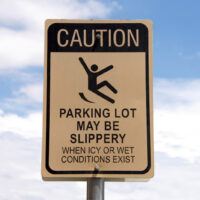
Winter in New York brings beauty and danger in equal measure. Snow, ice, and freezing rain can make entrances to stores, sidewalks, and parking lots treacherously slick. When a pedestrian slips and falls on such surfaces, serious injuries like fractures, head trauma, or soft-tissue damage can result. A key question for injured people is whether the store owner or property owner can be held liable for the accident.
While each case depends on its own facts, New York City’s legal framework makes clear that property owners have specific duties to maintain safe conditions and take reasonable care to prevent hazardous conditions, and those duties extend to snow and ice removal. Understanding the scope of those duties and when they arise is essential if you or a loved one has been hurt in an icy slip and fall. For help after a fall in Manhattan, Queens, Brooklyn or the Bronx, contact Leandros A. Vrionedes, P.C., to speak with an experienced New York City sidewalk slip and fall accident attorney.
Property Owners Must Maintain Safe Walkways Under NYC Law
In New York City, property owners and those in charge of buildings have legal responsibilities for the abutting sidewalk and adjacent walkways, including entrances and pathways used by customers and visitors. Under NYC Administrative Code § 7-210, owners of real property (other than one- to three-family owner-occupied homes used exclusively for residential purposes) are liable for failing to keep the sidewalk “in a reasonably safe condition.” This includes the removal of snow and ice after a storm ends and ensuring that hazards do not persist.
This duty arises not from common courtesy but from local law. If a property owner fails to address ice and snow within a reasonable period after it becomes their responsibility to do so, and a pedestrian is injured as a result, the owner may be held liable under premises liability principles.
Snow and Ice Removal Requirements Under NYC Administrative Code
According to NYC Administrative Code § 16-123(a), every owner, lessee, tenant, occupant, or other person in charge of a building or lot whose property abuts a paved sidewalk must remove snow and ice from that sidewalk and gutter within a defined period after snowfall ceases. Specifically, they must do so within four hours after the snow stops falling, except that the period between 9:00 p.m. and 7:00 a.m. is excluded from the four-hour calculation.
In practice, the City interprets snow removal timeframes much like this:
- When snow stops falling between roughly 7:00 a.m. and 5:00 p.m., sidewalks must be cleared within about four hours.
- When it stops between around 5:00 p.m. and 9:00 p.m., removal must generally occur by 9:00 a.m. the next morning.
- When snow or ice accumulation ends between about 9:00 p.m. and 7:00 a.m., the requirement is often to clear by 11:00 a.m. that same morning.
These timelines are designed to balance public safety with realistic expectations for property owners’ ability to address winter conditions. They also play into how courts assess whether a property owner acted reasonably after a storm.
The “Storm in Progress” Doctrine: A Key Legal Principle
One of the most important defenses property owners assert in snowy or icy slip and fall cases is the storm in progress doctrine. This legal principle acknowledges that it is unreasonable to expect property owners—whether residential, commercial, or large retail establishments—to keep walkways, entrances, and parking lots completely clear while snow or freezing rain is actively falling.
Under the storm in progress doctrine, a property owner is generally not required to clear snow or ice during an active storm, and liability typically does not attach until a reasonable time after the storm ceases. This doctrine has been recognized both in New York State and, specifically, in New York City, based on the timing provisions of § 16-123. Courts have applied this rule to dismiss cases where a fall occurred while the storm was still depositing snow or ice and no opportunity had yet existed to remove it.
However, the doctrine is not an absolute shield. A property owner who begins snow or ice removal during a storm must do so with reasonable care or risk liability for creating a more dangerous condition, such as piling snow to create a tripping hazard. Likewise, if expert weather data shows that the storm was no longer in progress and sufficient time had passed without meaningful snow and ice removal, the storm-in-progress defense may fail.
Entrances and Parking Lots: More Than Just Sidewalks
While § 16-123 explicitly addresses adjacent sidewalks, property owners’ obligations extend to entrances, walkways, ramps, and parking lot areas that customers and visitors use to access the business. Courts have long held that if an owner permits conditions to remain dangerous and causes or fails to remedy known hazards, liability can follow. Snow and ice are hazards included in this determination.
This is especially true in high-traffic areas such as store entrances and parking lots, where melting snow can refreeze overnight, and footsteps or vehicle tires rapidly transform snow into ice. If a property owner does not address these conditions within a reasonable period after a storm, or if they exacerbate the hazard, such as by improperly piling snow that melts and refreezes, liability may attach.
Putting Liability into Context
In examining whether a store owner is liable for a slip and fall on ice, courts look at:
- Whether the storm was ongoing at the time of the fall (storm in progress).
- How much time had elapsed since the storm ended and whether that period was sufficient for snow and ice removal under NYC law.
- Whether the property owner had actual or constructive notice of the dangerous condition and failed to address it.
- Whether the owner exacerbated the hazard by poor maintenance practices.
Notice is critical: a property owner must have known or should have known about the hazardous ice condition for liability to attach, except in certain cases where their control over the premises makes notice implicit.
Why Legal Guidance Matters
Snow and ice cases often hinge on the interaction between weather data, municipal codes, and property-specific facts. Certified meteorological records, maintenance logs, and expert testimony often determine whether a storm was “in progress,” whether a reasonable period for cleanup elapsed, and whether the owner’s conduct met legal standards.
A lawyer experienced in New York premises liability law can help gather and preserve this evidence, analyze the timing of a fall relative to snowfall, and evaluate the relative responsibilities of property owners and other potential defendants (such as snow removal contractors).
When Store Owners Are Likely Liable
A store owner or property owner may be liable for a slip and fall on an icy entrance or parking lot when:
- The storm had ended long enough that a reasonable time to remove snow and ice had passed under NYC Administrative Code § 16-123 timeframes.
- The property owner had actual or constructive notice of the ice and failed to remedy it in a reasonably safe manner.
- The owner’s snow removal practices exacerbated the hazard, such as piling snow in a way that created ice patches in walkways or parking areas.
- The icy condition was not a direct product of an active storm but an existing hazard that could and should have been addressed.
In contrast, a property owner may have a strong defense if the fall occurred while snow or freezing rain was still actively accumulating or if insufficient time had elapsed for cleanup.
Discuss Your Case With a New York Slip and Fall Attorney
Slip and fall accidents involving snow, ice, and freezing conditions can result in devastating injuries and significant financial hardship. Determining liability in these cases is complex and can involve weather records, municipal code analysis, and coordinated expert evidence.
At Leandros A. Vrionedes, P.C., we have extensive experience representing individuals injured in winter slip and fall accidents on icy sidewalks, store entrances, and parking lots. We understand how New York City Administrative Code §§ 7-210 and 16-123 interact with common law negligence principles and the storm in progress doctrine.
If you’ve been injured in a fall caused by snow or ice, contact our office for a free consultation to discuss your rights and options.