

Common Sidewalk Defects That Lead to Trip and Fall Claims Against the City
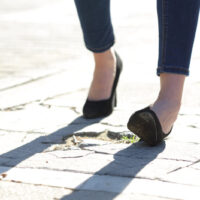
New York City’s sidewalks are among the busiest and most heavily worn in the country. With more than 12,000 miles of sidewalks traversed daily by millions of pedestrians, deterioration is inevitable. Cracked concrete, uneven slabs, tree root upheaval, and potholes are not merely cosmetic problems; they are some of the most common causes of serious trip and fall injuries in the city.
When a pedestrian is injured due to a defective sidewalk, an immediate and important legal question arises: Can the City of New York be held liable? The answer depends on the nature of the defect, who was responsible for maintaining the sidewalk, whether the City had proper notice of the condition, and whether specific statutory requirements have been met. Understanding the types of sidewalk defects that frequently give rise to claims and how liability is established is critical for anyone injured in a sidewalk fall. Learn more below, and contact Leandros A. Vrionedes, P.C., for legal advice and skilled assistance from an experienced New York Sidewalk trip and fall accident lawyer.
Sidewalk Liability in New York City: The Legal Framework
Under NYC Administrative Code § 7-210, responsibility for sidewalk maintenance generally rests with the abutting property owner, not the City. However, significant and important exceptions exist. The City of New York may still be liable where the sidewalk abuts City-owned property, such as parks, public housing, schools, municipal buildings, or where the City itself created the hazardous condition through negligent construction, repair, or utility work. Also, the City has assumed responsibility for sidewalks abutting one, two, or three-family houses that are at least partially owner-occupied and used exclusively for residential purposes.
Additionally, even when the City is not the primary party responsible for maintenance, claims against the City often arise because the City controls inspections, street trees, underground infrastructure, and roadway design, each of which can contribute to dangerous sidewalk conditions.
Slip and fall claims against the City are also governed by strict procedural rules, including prior written notice requirements and short filing deadlines. These legal hurdles make it essential to identify the precise defect and its origin.
Raised or Uneven Sidewalk Slabs
One of the most common sidewalk defects leading to fall injuries is raised or uneven concrete slabs. Over time, sidewalks shift due to soil movement, freeze-thaw cycles, vibration from traffic, and natural settling. When one slab rises higher than the adjacent slab, pedestrians can easily catch a foot and fall forward with little warning.
New York courts frequently examine whether the height differential constitutes a “trivial defect.” While very small variations may be deemed non-actionable, height differentials of one inch or more, particularly when combined with poor lighting, heavy pedestrian traffic, or visual obstructions, are often considered dangerous conditions capable of supporting liability.
When raised slabs are located adjacent to City property or caused by City construction or repair work, the City may be a proper defendant. In such cases, evidence showing that the condition existed for a sufficient period of time or was affirmatively created by municipal activity is critical.
Loose, Crumbling, or Deteriorated Pavement
Sidewalks throughout the city suffer from surface deterioration, including crumbling concrete, spalling, loose aggregate, and missing chunks of pavement. These conditions create irregular walking surfaces that can cause pedestrians to lose footing, particularly in wet or icy weather.
Deteriorated pavement is especially dangerous because it may not be immediately apparent. A pedestrian may step onto what appears to be solid ground only for the surface to give way underfoot. These types of defects are often found near curb cuts, bus stops, and areas subject to repeated stress from vehicles or heavy foot traffic.
When the deterioration results from long-term neglect, liability often turns on whether the City had prior written notice of the defect. However, if the condition resulted from recent City work, such as a poorly restored sidewalk following utility access, the notice requirement may be bypassed.
Tree Root Damage and Uplifted Sidewalks
Tree roots are a leading cause of sidewalk upheaval across New York City. As trees mature, their roots expand beneath the surface, lifting and cracking concrete slabs. These raised sections can create sudden changes in elevation that are difficult to detect, particularly when obscured by leaves, shadows, or snow.
Tree-related sidewalk defects are legally significant because street trees are typically owned and maintained by the City of New York, often through the Parks Department. When a sidewalk defect is caused by the roots of a City-owned tree, courts have frequently found that the City retains responsibility, even if the sidewalk abuts private property.
Establishing liability in these cases often requires proof that the tree was indeed City-owned and that the City either had notice of the dangerous condition or failed to properly manage the tree’s root growth over time.
Potholes and Depressions in Sidewalks
While potholes are commonly associated with roadways, they also occur on sidewalks. Sidewalk potholes can form due to water infiltration, subgrade erosion, utility collapses, or prior patchwork repairs that deteriorate over time.
Depressions in the sidewalk surface can cause pedestrians to misstep, twist an ankle, or fall forward. These defects are particularly hazardous at night or in poor weather when visibility is reduced. Unlike raised slabs, potholes create sudden drops in elevation that are difficult to anticipate.
Claims involving sidewalk potholes often focus on how long the defect existed and whether the City had prior written notice through inspection reports, complaints, or violation records. In some cases, proof that the City created the condition, such as through negligent utility restoration, can eliminate the notice requirement altogether.
Defective Curb Cuts and ADA Ramps
Curb cuts and pedestrian ramps are designed to improve accessibility, but when improperly designed, constructed, or maintained, they can become dangerous. Cracked surfaces, pooling water, steep slopes, and uneven transitions between the ramp and sidewalk frequently contribute to slip and fall accidents.
Because curb cuts are often installed or modified by the City, liability may arise where defects stem from improper municipal design or failure to maintain ADA-compliant conditions. These cases can involve both negligence principles and violations of accessibility standards, adding another layer of complexity.
Missing or Sunken Utility Covers and Hardware
Sidewalks are frequently interrupted by utility covers, access panels, and grates belonging to the City or public utilities. When these covers are improperly seated, broken, or sunken below the sidewalk surface, they pose a serious tripping hazard.
Falls caused by defective utility hardware often require determining ownership and control. While some covers belong to private utilities, others are City-owned. If the City installed, maintained, or failed to properly inspect its own hardware, liability may attach.
The Role of Prior Written Notice in Claims Against the City
A critical feature of sidewalk defect claims against the City is the prior written notice requirement. Under NYC Administrative Code § 7-201(c)(2), the City generally cannot be held liable unless it received written notice of the specific defect before the accident.
There are two major exceptions. First, if the City affirmatively created the dangerous condition through negligent work, prior written notice is not required. Second, if the defect resulted from a special use by the City that conferred a benefit upon it, liability may arise without prior notice.
Determining whether prior written notice exists often requires a thorough search of City records, including Department of Transportation complaints, inspection logs, and 311 reports.
Why Sidewalk Defect Cases Are Evidence-Driven
Sidewalk defect claims against the City are rarely straightforward. Success often depends on preserving photographs of the defect, measuring height differentials or depressions, securing witness statements, and obtaining municipal records before they are lost or altered.
The City frequently repairs sidewalk defects after an accident, making early documentation essential. Weather conditions, lighting, pedestrian traffic patterns, and the defect’s visibility all play a role in how courts assess liability.
Serious Injuries Commonly Caused by Sidewalk Defects
Falls caused by sidewalk defects frequently result in serious injuries, including fractures of the wrist, ankle, or hip; knee and shoulder injuries; head trauma; and spinal damage. These injuries can have lasting consequences, particularly for older pedestrians, and often require extensive medical treatment and rehabilitation.
Documenting the full extent of injuries and linking them directly to the sidewalk condition is a key component of any claim.
Speak With a New York Sidewalk Injury Attorney
Sidewalk defect claims against the City of New York involve strict deadlines, complex liability rules, and aggressive defenses. Identifying the responsible party, proving notice or creation of the defect, and complying with notice-of-claim requirements are all critical steps that must be handled correctly from the outset.
At Leandros A. Vrionedes, P.C., we represent pedestrians injured due to dangerous sidewalk conditions in Brooklyn, the Bronx, Queens, and Manhattan throughout New York City. Our firm understands how to investigate sidewalk defects, navigate municipal liability laws, and pursue claims against the City and other responsible parties.
If you were injured in a sidewalk fall, contact our office to discuss your case and learn whether the City or another entity may be held legally responsible for the harm you have suffered.