
When a Construction Accident Involves Multiple Contractors: How Liability Is Shared
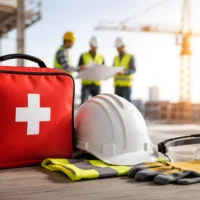
Construction sites are busy workplaces where several companies often perform different jobs at the same time. A single project may involve the property owner, a general contractor, multiple subcontractors, equipment suppliers, and various trades working side by side. While this coordination helps keep a project moving, it can also make it much more difficult to determine who is legally responsible when a worker is injured.
Many people assume that liability automatically falls on the company that directly employed the injured worker. In reality, construction accident cases often require a detailed investigation into who controlled the work, who was responsible for safety, and whether multiple parties contributed to the accident. For injured construction workers in Manhattan, Queens, Brooklyn and the Bronx, New York City construction accident lawyer Leandros A. Vrionedes, P.C. investigates the roles of every company involved in a project to determine how liability should be allocated under New York law.
Why Do Construction Accidents Often Involve Multiple Contractors?
Modern construction projects are highly specialized. Instead of one company performing every task, work is typically divided among numerous contractors with different responsibilities. For example, one subcontractor may install steel framing while another performs electrical work. Separate companies may handle plumbing, roofing, concrete, masonry, demolition, or scaffolding. The general contractor is usually responsible for coordinating these trades and keeping the project moving safely. But because so many companies are working in the same area, accidents often occur when one contractor’s work affects another contractor’s employees.
Why Is Coordination So Important on Construction Sites?
Construction work is carefully scheduled so that multiple trades can perform their work efficiently without creating unnecessary hazards for others. When communication breaks down, serious accidents can occur. For example, one contractor may remove guardrails without notifying other workers, leave building materials in walkways, operate heavy equipment near pedestrian work areas, or create unsafe floor openings that another crew encounters later in the day. In many cases, the accident is not caused by a single mistake but by a series of failures involving planning, communication, and supervision.
What Does “Control” Mean in a Construction Accident Case?
One of the most important legal questions is who had the authority to control the work that led to the accident. Control, in this context, does not necessarily mean that a company physically performed the work. Instead, courts often look at who had the ability to supervise, coordinate, direct, or correct unsafe conditions. For example, a general contractor may not personally install scaffolding or operate machinery, but if it had overall responsibility for coordinating site safety and ensuring that hazards were addressed, that level of control may become an important issue in the case. Likewise, individual subcontractors may be responsible for maintaining safe conditions within the areas where they are performing their work.
How Do New York Labor Laws Affect These Cases?
Construction accident claims frequently involve New York Labor Law Sections 200, 240(1), and 241(6). Each addresses different duties and legal standards. Labor Law § 200 generally reflects the common-law duty to provide workers with a reasonably safe place to work. Liability often depends on whether a party exercised supervisory control over the work or had notice of a dangerous condition.
Labor Law § 240(1), commonly known as the Scaffold Law, applies to certain gravity-related accidents involving falls from heights or falling objects. Property owners and general contractors may be held strictly liable when required safety devices are missing or inadequate.
Labor Law § 241(6) requires owners and contractors to comply with specific provisions of New York’s Industrial Code governing construction site safety. Violations of applicable regulations may support a claim when they contribute to a worker’s injuries.
Because different parties may have different responsibilities under these statutes, determining liability requires a careful analysis of each company’s role on the project.
Can More Than One Company Be Responsible?
Yes. It is common for multiple companies to share responsibility for the same construction accident. For example, one contractor may create a hazardous condition, another may fail to correct it, and the general contractor may fail to coordinate the work or enforce site safety requirements. In that situation, more than one defendant may be found legally responsible. New York law allows liability to be allocated among multiple parties based on the facts of the case and the legal duties each party owed to the injured worker.
When multiple defendants are found liable, New York law governs how damages are allocated. One important rule involves joint and several liability under Article 16 of the New York Civil Practice Law and Rules (CPLR). In general, defendants who are found liable remain jointly and severally liable for economic damages, such as:
- Medical expenses
- Lost wages
- Future medical care
- Loss of earning capacity
This means an injured worker may be able to recover the full amount of these economic losses from any liable defendant, which can be especially helpful if another responsible party is unable to pay.
The rules are different for non-economic damages, such as pain and suffering, emotional distress, and loss of enjoyment of life. Under Article 16, a defendant who is found to be 50% or less at fault for the accident is generally responsible only for its proportional share of these non-economic damages, although important statutory exceptions may apply in certain cases.
Because fault allocation can directly affect how damages are paid, determining each defendant’s role is often a significant part of construction accident litigation.
What Evidence Helps Determine Responsibility?
When several contractors are involved, the investigation typically focuses on how the project was organized and supervised. Important evidence may include contracts, daily work logs, safety meeting records, inspection reports, photographs, incident reports, witness statements, and project schedules. These documents often help establish who controlled the work area, who was responsible for safety inspections, and whether hazards had been identified before the accident occurred. The sooner this evidence is preserved, the easier it is to reconstruct what happened and identify all responsible parties.
Why Is Early Investigation So Important?
Construction sites change quickly. Equipment is moved, hazards are repaired, work continues, and different contractors rotate on and off the project. As a result, valuable evidence may disappear within days after an accident. Prompt investigation helps preserve photographs, obtain witness statements while memories are fresh, and secure records showing which companies were present and what responsibilities they had on the day of the incident. An early investigation also helps clarify how coordination—or the lack of coordination—between contractors may have contributed to the accident.
Contact Leandros A. Vrionedes, P.C.
Construction accident cases involving multiple contractors require a careful analysis of who controlled the work, who was responsible for coordinating safety, and how New York’s Labor Law and liability rules apply. These cases are often far more complex than they first appear because responsibility may be shared among several parties. Leandros A. Vrionedes, P.C. represents injured construction workers throughout New York City, Nassau County, and Westchester County. The firm thoroughly investigates construction site accidents, identifies all potentially responsible parties, and works to recover the full compensation available under New York law.
If you were injured on a construction site involving multiple contractors, contact Leandros A. Vrionedes, P.C. today to discuss your rights and learn how the firm can help you pursue your claim.
