

Left-Turn Accidents in New York: Why Fault Is Often Disputed
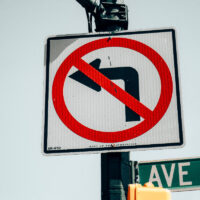
Left-turn crashes are one of the most common and most complicated types of car accidents on New York roads. Turning left may seem routine, but it requires a driver to cross lanes of oncoming traffic, judge gaps in vehicles approaching at high speeds, and watch for pedestrians and bicyclists. Because of all these moving pieces, left-turn collisions often lead to serious injuries and disputes over who was at fault.
Most people assume that the driver making the left turn is automatically at fault, but that is not always the case. Understanding how fault is assigned and why it is frequently challenged can help injured victims protect their rights after a crash. If you have been injured in an intersection crash in Manhattan, Queens, Brooklyn, or the Bronx, or outside NYC in Nassau or Westchester County, contact Leandros A. Vrionedes, P.C., to speak with an experienced and successful New York City car accident lawyer.
Why Left Turns Are So Risky
Accidents involving left turns happen for a simple reason: a driver must often cross traffic that has the right-of-way. Under New York Vehicle and Traffic Law § 1141, a driver making a left turn must yield to oncoming traffic that is already in the intersection or “so close as to constitute an immediate hazard.” In other words, cars traveling straight through the intersection generally have priority over a left-turning vehicle, but the speed and distance of the oncoming vehicle are key to this determination.
Collisions during left turns often involve T-bone (side-impact) crashes or head-on impacts, and both types of crashes tend to result in serious injuries.
Why Fault Is Often Disputed
1. Right-of-Way Rules Are Clear, But Real-World Conditions Are Not
New York law clearly says a driver turning left must yield to oncoming traffic that is close enough to be a hazard. However, in real crashes, it is not always clear whether the oncoming vehicle was close enough to be a hazard at the moment the turn was begun. Simple differences in speed, distance, weather conditions, or traffic patterns can create genuine disagreement about whether the turning driver had enough time to complete the turn safely.
For example, two drivers may describe the timing differently: one says there was a safe gap, the other says there wasn’t. Without clear evidence like traffic-camera video or skid-mark analysis, these disputes become issues for negotiation or even trial.
2. Signals and Traffic Controls Can Change the Analysis
Left turns made on a green arrow signal usually give the turning driver the right of way, meaning the oncoming traffic should be stopped. If an accident occurs under a green arrow, the driver going straight may be at fault for running the signal.
By contrast, a left turn made on a normal green light (without a protected arrow) is unprotected. In that situation, the turning driver must wait for a safe gap in traffic before turning, and collisions are more likely to be attributed to the turning driver. Because intersections vary in signal timing and sign placement, disputes over the applicable traffic control often arise.
3. Other Drivers May Share or Shift Fault
Although a left-turning driver is often considered at fault because of the duty to yield, the other driver is not always free from liability. If the oncoming driver was speeding, ran a red light, was distracted, or otherwise violated traffic laws, their conduct may have contributed to the crash. In such cases, fault may be shared.
New York follows a modified comparative negligence rule in these instances, where both drivers can be assigned fault percentages. Even a driver who was making the left turn can recover some damages if the other driver was partly at fault, such as by speeding. So long as the accident victim is not more than 51% to blame, they can sue the other driver for their negligence. If successful, the amount of damages they recover will be reduced by their percentage of fault.
4. Visibility and Road Conditions Complicate the Picture
Left-turn collisions often occur where visibility is limited by obstacles such as parked trucks, buses, bushes, or even weather conditions. When a driver claims that visibility was blocked or that they could not see approaching traffic until too late, insurance companies and courts must weigh that evidence carefully. Poor visibility doesn’t excuse a failure to yield, but it can support arguments that the other driver was speeding or otherwise negligent.
5. Speed and Distance Misjudgments Lead to Disputes
A left-turning driver must judge the speed and distance of oncoming vehicles before entering the intersection. Misjudging that critical gap is a frequent cause of left-turn crashes. Insurance companies often obtain expert accident reconstructions to estimate whether a turn was reasonable given the other vehicle’s speed. These technical analyses can lead to sharp disagreements between experts and, by extension, between the parties.
Insurance Companies Use Fault Disputes Strategically
Insurance companies are in the business of minimizing payouts, and left-turn cases are particularly attractive targets for aggressive defense strategies. Because left-turn accidents don’t always come with a clear “smoking gun,” insurers frequently:
- Argue that the turn was made too soon
- Claim the oncoming vehicle was, in fact, too close
- Contend that the turning driver misjudged the gap
- Suggest contributory negligence by the straight-through driver
Even when the law seems to favor one driver, insurers may use every uncertainty in the facts to argue for shared fault or to push for a lower settlement. That’s why left-turn collisions often take longer to resolve and why engaging an attorney early can be critical.
Evidence Matters More Than Assumptions
Because fault is often disputed, strong evidence is key in left-turn crashes. Some of the most important types of evidence include:
- Traffic camera footage from intersections or nearby businesses
- Police reports that document right-of-way violations or signal status
- Accident reconstruction expert opinions
- Photographs of roadway conditions, skid marks, and vehicle positions
- Witness statements from bystanders or other drivers
Without solid evidence, insurers may cling to assumptions that the turning driver was at fault based solely on the general rule that left turns must yield.
When the Left-Turner Is Not at Fault
It is a common misconception that a left-turning driver is always to blame. However, there are important exceptions that challenge that assumption:
- A crash occurs while a left turn is being made under a protected green arrow, and the other driver runs a red light.
- The oncoming driver was speeding or violating traffic laws in a way that made the crash unavoidable.
- Road conditions, signals, or signage were defective or misleading.
These scenarios demonstrate why fault is not a foregone conclusion, even in left-turn accidents.
Why Legal Guidance Matters in Left-Turn Cases
Left-turn collisions sit at the intersection of traffic law, negligence principles, and real-world human judgment. Resolving disputes about fault often requires careful analysis of right-of-way rules, comparative fault principles, and the specific facts of the crash.
At Leandros A. Vrionedes, P.C., we understand how to dissect the key issues in left-turn accidents and build strong cases even when insurers initially cast blame too broadly. If you’ve been injured in a left-turn collision, you don’t have to accept a rushed fault determination based on assumptions. Contact us to discuss how liability is properly evaluated and how to protect your right to compensation.