
Slip and Fall Claims Involving Recently Mopped Floors: What Evidence Matters Most
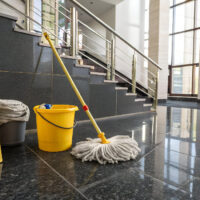
Slip and fall accidents caused by recently mopped floors are among the most common premises liability claims in New York, from grocery stores and pharmacies to big-box retailers and office buildings. Yet these cases are often misunderstood. Many injured people assume that if a floor was wet and no warning sign was present, liability is automatic. In reality, success in a mopped-floor slip and fall case depends less on the presence of water and more on the quality of the evidence showing how, when, and why the condition existed.
For New York slip and fall claims involving floor cleaning, courts focus heavily on store policies, cleaning records, and employee conduct. These cases are often very challenging and are won—or lost—based on whether the evidence demonstrates that the property owner failed to follow reasonable safety practices. Understanding what evidence matters most is critical for anyone injured on a freshly cleaned floor. For help after a slip and fall on dangerous premises in Brooklyn, the Bronx, Queens or Manhattan, contact Leandros A. Vrionedes, P.C., to speak with an experienced and successful New York City slip and fall injury lawyer.
Why Recently Mopped Floors Are Treated Differently Under New York Law
Unlike leaks or weather-related hazards, mopped floors are created intentionally by the property owner or its employees. That distinction is important. When a dangerous condition is created by the defendant, the injured person does not need to prove that the store had advance notice of the hazard. Instead, the issue becomes whether the cleaning was performed reasonably and safely.
New York courts recognize that mopping is a necessary activity. However, property owners still have a duty to take reasonable steps to protect customers during and after cleaning. That duty is measured not by common sense alone, but by written procedures, employee training, and actual practices on the day of the accident.
Cleaning Logs: A Central Piece of Evidence
One of the most important sources of evidence in a mopped-floor slip and fall case is the store’s cleaning log or maintenance record. Many businesses maintain written or digital logs documenting when floors are cleaned, who performed the work, and what areas were addressed. These records are often introduced by the defense to show routine maintenance, but they frequently raise more questions than answers.
Cleaning logs can reveal inconsistencies between what a store claims and what actually happened. For example, a log may indicate that a floor was mopped minutes before the fall, contradicting employee testimony that the area had already dried. In other cases, the absence of a log entry may suggest that cleaning was performed without proper documentation or supervision. Inconsistencies, gaps, or generic entries in cleaning logs can undermine a store’s claim that it acted reasonably.
Just as importantly, logs may reveal whether store policy required additional safety steps, such as post-mopping inspections, that were not performed.
Internal Cleaning Policies and Safety Procedures
Beyond logs, courts closely examine a store’s written cleaning and safety policies. Large retailers and grocery chains often have detailed protocols governing how floors must be cleaned, when warning signs must be placed, and how long areas should remain blocked off.
If a store has a policy requiring caution signs during mopping, but employees failed to follow it, that deviation can be powerful evidence of negligence. Conversely, if no written policy exists, that absence may itself raise questions about whether the business took reasonable precautions to protect customers.
Policies may also address issues such as drying time, use of fans or absorbent materials, or whether cleaning should be done during off-peak hours. When a slip and fall occurs shortly after mopping, a failure to follow these internal rules often becomes a central issue in litigation.
Employee Testimony and What It Can Reveal
Employee testimony is another critical component of mopped-floor cases. Depositions of store employees frequently uncover important details about how cleaning is actually done in practice, as opposed to how it is supposed to be done on paper.
Employees may testify about staffing shortages, pressure to clean quickly, or instructions to mop during business hours despite heavy foot traffic. In some cases, workers acknowledge that warning signs were not available, were placed too far away, or were routinely ignored. These admissions can be pivotal in establishing that the store failed to act reasonably under the circumstances.
Employee testimony can also clarify who performed the cleaning, whether a supervisor was present, and whether the area was inspected before customers were allowed to walk through it.
Warning Signs Are Not the Whole Story
While warning signs are often discussed in wet floor cases, their presence or absence is only one piece of the puzzle. A single sign placed far from the hazard or positioned where it was not visible from the direction of travel may be legally insufficient. Likewise, a sign does not excuse unsafe cleaning practices if the floor was left excessively wet or slippery.
Courts evaluate warning signs in context. The questions are whether the sign was reasonably placed, whether it adequately warned approaching customers, and whether additional precautions were necessary given the location and foot traffic. Evidence showing that signs were routinely reused, poorly positioned, or placed after an incident can significantly weaken a defense case.
Surveillance Footage and Timing Evidence
In many mopped-floor cases, surveillance video provides critical insight into timing. Footage may show exactly when cleaning occurred, how long the floor remained wet, and whether customers were funneled through the area despite obvious hazards.
Video evidence can also contradict employee statements about inspections or drying time. When combined with cleaning logs and testimony, surveillance footage often forms a clear timeline that helps establish whether the store acted reasonably or cut corners.
The Role of Comparative Fault
Defendants frequently argue that the injured person should have seen the wet floor and avoided it. New York’s comparative negligence rules allow juries to consider whether a plaintiff exercised reasonable care, but that argument does not excuse unsafe cleaning practices.
Evidence showing rushed mopping, poor visibility, crowded aisles, or inconsistent warning measures can significantly reduce or eliminate claims of comparative fault. The stronger the evidence of unsafe procedures, the weaker the defense argument becomes.
Why Evidence Preservation Matters
Because cleaning logs, surveillance footage, and employee recollections can disappear quickly, early investigation is critical. Video is often overwritten within days. Logs may be altered or discarded. Employees may leave or forget key details. Acting quickly to preserve evidence can make the difference between a strong case and an uphill battle.
How Leandros A. Vrionedes, P.C. Can Help
Slip and fall cases involving recently mopped floors are not simple “wet floor” claims. They are evidence-driven cases that require a close examination of internal practices, documentation, and employee conduct. At Leandros A. Vrionedes, P.C., we understand how to investigate these cases thoroughly and identify the proof that matters most.
If you were injured after slipping on a recently cleaned floor in New York City, you may have a valid claim, even if warning signs were present. Contact Leandros A. Vrionedes, P.C., for a free consultation to discuss your rights and learn how we can help you pursue compensation for your injuries.
