
New York City Decriminalizes Jaywalking: What the New Rules Mean for Pedestrian Accidents and Liability
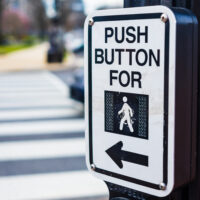
In 2025, New York City formally decriminalized jaywalking, bringing major changes to how pedestrians may cross city streets and how fault is analyzed after a pedestrian knockdown accident. While the new rules remove penalties for many forms of mid-block or out-of-crosswalk crossings, they do not give pedestrians blanket right-of-way, nor do they eliminate considerations of negligence when a pedestrian is struck by a vehicle.
Understanding what has changed—and what has not—is critical for anyone injured in a pedestrian accident in New York City. If you were hit while crossing the street in Manhattan, Brooklyn, Queens, or the Bronx, contact Leandros A. Vrionedes, P.C., to speak with a knowledgeable and experienced NYC pedestrian accident lawyer.
Why New York City Decriminalized Jaywalking
The change was mandated by Local Law 98 of 2024, which amended § 19-195 of the New York City Administrative Code and directed the NYC Department of Transportation (DOT) to revise its Traffic Rules accordingly. Following public notice and a hearing, DOT adopted amendments to Chapter 4 of Title 34 of the Rules of the City of New York, formally decriminalizing jaywalking.
The stated purpose of the rule change was to align traffic enforcement with modern pedestrian behavior, reduce unnecessary police encounters, and focus enforcement on dangerous driving rather than pedestrian movement. Importantly, DOT emphasized that decriminalization does not equal deregulation—the duties of care for both pedestrians and drivers remain intact.
What Jaywalking Decriminalization Actually Means
Under the amended rules, pedestrians:
- May cross any roadway, other than a limited-access highway, at any point, including outside marked or unmarked crosswalks.
- Will not receive a traffic violation for failing to yield to vehicles when crossing outside a crosswalk.
However, the rules repeatedly emphasize that pedestrians must still yield to traffic that has the right-of-way, even though failure to yield is no longer a ticketable offense.
In other words:
- Jaywalking is no longer illegal.
- Unsafe crossing is still unsafe.
- Decriminalization does not eliminate civil liability.
When Pedestrians Do Have the Right of Way
Despite the changes, New York City law continues to strongly protect pedestrians inside crosswalks.
Crosswalks (Marked or Unmarked)
Under amended 34 RCNY § 4-04(b):
- Drivers must stop for pedestrians in marked or unmarked crosswalks when traffic control signals are not in place or not operating.
- Drivers must remain stopped until the pedestrian finishes crossing.
- Other vehicles may not pass a vehicle stopped for a pedestrian.
This remains one of the strongest pedestrian protections in New York law. If a pedestrian is struck while lawfully crossing at an intersection, even without painted lines indicating a crosswalk, the driver will often be presumed negligent.
Blinking or Non-Operational Signals
Drivers facing:
- Blinking yellow lights must proceed with caution and yield to pedestrians.
- Blinking red lights must stop and yield before proceeding.
Failure to yield in these situations can be powerful evidence of driver negligence in a pedestrian knockdown case.
When Pedestrians Do Not Have the Right of Way
The new rules are explicit that pedestrians do not have the right of way in several common situations.
Crossing Outside a Crosswalk
Under 34 RCNY § 4-04(c):
- Pedestrians crossing mid-block or outside a crosswalk do not have the right of way.
- Pedestrians must yield to vehicles already traveling with priority.
Jaywalking is permitted, but it is still legally subordinate to vehicle traffic.
Against a Steady Red Hand or Red Light
Pedestrians facing a steady upraised hand or a steady red traffic signal do not have the right of way. The rules explicitly warn that pedestrians entering the roadway in these conditions are “at risk of injury” from traffic that has the right of way.
Duty of Care Still Applies to Everyone
One of the most important aspects of the amended rules is what did not change.
Drivers Must Still Exercise Due Care
Under 34 RCNY § 4-04(e), “The operator of a vehicle must exercise due care to avoid colliding with any pedestrian.” This means drivers cannot simply claim “jaywalking” as a defense if they were speeding, distracted, failing to yield when required, making unsafe turns, ignoring pedestrian presence, or otherwise negligent.
Pedestrians Must Still Act Reasonably
The rules also state that pedestrians must exercise due care for their own safety, are cautioned against suddenly stepping into traffic, and remain responsible for yielding where required. Decriminalization removes fines, not responsibility.
How the New Rules Affect Pedestrian Accident Liability
Jaywalking No Longer Equals Automatic Fault
Before these changes, drivers often argued that a pedestrian’s violation of traffic rules barred or severely limited their recovery after a knockdown. That argument is now significantly weakened. Because jaywalking is no longer a violation, crossing outside a crosswalk cannot automatically establish negligence. Likewise, insurance companies cannot rely solely on a “jaywalking” citation to deny a claim against their insured driver.
Comparative Negligence Still Applies
New York remains a pure comparative negligence state for most personal injury claims but has adopted a modified rule for accidents involving motor vehicles. Courts will still analyze factors such as where the pedestrian crossed; whether the driver had time to react; visibility, speed, lighting, and traffic conditions; and whether either party failed to exercise reasonable care. A pedestrian may recover damages even if partially at fault (but not more at fault than the driver), but their compensation will be reduced by their percentage of responsibility. Drivers and their insurers will continue to try to shift as much blame as they can on the pedestrian, making it essential to get strong legal representation from an experienced pedestrian accident attorney who knows how to build the strongest case proving the negligent driver’s responsibility for causing the accident.
What The New Rules Mean After a Pedestrian Knockdown Accident in NYC
If you were hit by a car in New York City after the jaywalking rules changed, do not assume you are barred from recovery because you crossed mid-block, but do not assume the driver is automatically at fault either. The outcome will depend on a fact-specific negligence analysis, not whether jaywalking occurred. Photographs, video footage, witness statements, traffic signal status, and accident reconstruction become even more important under the new framework.
New York City’s decision to decriminalize jaywalking reflects a shift in public policy, but it does not rewrite the fundamentals of personal injury law. Pedestrians are freer to cross streets without fear of summonses, but rights of way still matter, and negligence still determines liability.
If you or a loved one was injured in a pedestrian knockdown accident, especially under the new rules, it is critical to speak with an attorney who understands how these regulatory changes affect real-world injury claims. An experienced New York pedestrian accident lawyer can evaluate fault, preserve evidence, and fight back against insurers who continue to rely on outdated assumptions about jaywalking and liability.
In Brooklyn, the Bronx, Manhattan, Queens, and throughout New York City and Nassau and Westchester counties, contact Leandros A. Vrionedes, P.C., for a free consultation to discuss your claim and find out how we can help.
