
Falls From Heights vs. Same-Level Falls on New York Construction Sites
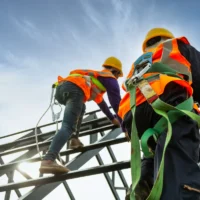
Construction sites are inherently hazardous environments. For construction workers in New York, a critical question arises after a fall: Does it matter legally whether I fell from a height or simply tripped and fell on the same level?
The answer is yes. Under New York law, the legal framework that applies to a construction accident can vary significantly depending on whether gravity-related risks were involved. Falls from heights frequently trigger New York Labor Law § 240(1), commonly known as the Scaffold Law. Same-level falls, by contrast, are more commonly evaluated under Labor Law § 241(6), Labor Law § 200, and general negligence principles.
Understanding these distinctions is critical because they affect who can be held liable and how difficult it may be to prove the case. If you have been hurt on a construction site in Manhattan, Queens, Brooklyn or the Bronx, call Leandros A. Vrionedes, P.C., to speak with a skilled and experienced NYC construction accident lawyer who can evaluate your claim and help you get the care and compensation you deserve.
Falls From Heights and the Scaffold Law (Labor Law § 240(1))
New York Labor Law § 240(1) is one of the most powerful protections available to construction workers. It applies when a worker is injured due to an elevation-related hazard, meaning the injury was caused by the effects of gravity.
Typical examples include:
- Falling from a scaffold, ladder, roof, or platform
- Falling through an unprotected opening
- Being struck by a falling object that should have been secured
- A ladder that shifts, collapses, or fails to provide proper protection
The key issue is whether the injury arose from a failure to provide proper safety devices designed to protect against elevation-related risks.
What Makes the Scaffold Law Different?
Unlike most negligence claims, Labor Law § 240(1) imposes what courts often describe as “absolute liability” on property owners and general contractors. This does not mean that liability is automatic in every fall case. It means that if the statute applies and the required safety devices were not properly provided, the owner or contractor can be held liable even if they did not directly supervise the worker.
To succeed under § 240(1), the injured worker must show:
- The work being performed was a covered construction, demolition, repair, or related activity
- The injury was caused by an elevation-related risk
- The absence or inadequacy of a safety device was a proximate cause of the injury
If these elements are satisfied, comparative negligence (for example, an argument that the worker was partially careless) generally does not reduce the worker’s recovery under this statute. Because of this strong worker protection, fall-from-height cases often carry significant settlement value.
Same-Level Falls: When Gravity Is Not the Central Issue
Not all construction site falls involve heights. Many workers are injured by slipping or tripping on debris, power cords, uneven surfaces, wet floors, or improperly maintained work areas. These are commonly referred to as same-level falls.
Examples include:
- Tripping over scattered materials or tools
- Slipping on water, mud, or oil
- Falling due to uneven ground or a hole in a floor
- Tripping over extension cords or construction equipment
In these situations, Labor Law § 240(1) typically does not apply because the accident did not result from an elevation-related hazard. Instead, other statutes may govern the claim.
Labor Law § 241(6): Industrial Code Violations
Labor Law § 241(6) requires owners and contractors to provide reasonable and adequate protection to workers and to comply with specific safety rules set forth in the New York Industrial Code.
This statute is often central in same-level fall cases. For example, certain Industrial Code provisions address:
- Keeping work areas free of debris
- Properly maintaining passageways and floors
- Providing safe footing
- Guarding hazardous openings
Unlike the Scaffold Law, § 241(6) does not impose automatic liability. The injured worker must identify a specific, applicable Industrial Code regulation that was violated and show that the violation was a substantial factor in causing the injury.
If successful, the worker can recover damages. However, comparative negligence does apply under § 241(6). If a worker is found partially responsible, the damages award may be reduced proportionally.
Labor Law § 200 and Common-Law Negligence
Labor Law § 200 is essentially a codification of common-law negligence principles. It requires owners and contractors to provide workers with a reasonably safe place to work.
Section 200 claims typically arise in two types of scenarios:
- Dangerous or defective premises conditions
- Means and methods of the work (where supervision or control is involved)
In same-level fall cases involving debris, slippery conditions, or poor site maintenance, a § 200 claim may focus on whether the owner or contractor had actual or constructive notice of the hazardous condition. To establish liability, the worker must generally show:
- A dangerous condition existed
- The defendant created the condition or knew (or should have known) about it
- The condition caused the injury
Unlike § 240(1), these claims require proof of negligence. The burden is higher, and comparative fault can significantly affect recovery.
Why the Legal Distinction Matters
The classification of a fall as elevation-related versus same-level can dramatically change the strength of a construction accident lawsuit.
In a fall-from-height case governed by Labor Law § 240(1):
- The legal standard is more favorable to the worker
- Comparative negligence typically does not reduce damages
- Owners and general contractors may be held liable regardless of direct supervision
In a same-level fall case under Labor Law § 241(6) or § 200:
- The worker must prove a specific code violation or negligence
- Comparative fault can reduce compensation
- Notice of the hazard may become a central issue
This distinction often becomes the subject of litigation early in the case, including summary judgment motions where defendants argue that the Scaffold Law does not apply.
Workers’ Compensation vs. Third-Party Lawsuits in New York
Regardless of whether a fall is from a height or at the same level, injured construction workers in New York are generally entitled to workers’ compensation benefits. Workers’ compensation covers medical treatment and a portion of lost wages but does not provide compensation for pain and suffering.
However, when an accident involves a violation of Labor Law § 240(1), § 241(6), or § 200, the worker may also pursue a third-party lawsuit against the property owner, general contractor, or another responsible entity. This is where full damages, including pain and suffering and loss of earning capacity, may be available.
Evaluating Your NYC Construction Fall Case
Construction accident litigation in New York is highly fact-specific. Determining which statute applies requires careful analysis of:
- The height differential involved
- The type of work being performed
- The equipment used
- The presence or absence of safety devices
- Applicable Industrial Code provisions
At Leandros A. Vrionedes, P.C., we represent injured construction workers throughout New York City and beyond, including Nassau County and Westchester County. Whether your accident involved a fall from scaffolding or a same-level trip over debris, we examine every potential avenue of recovery under New York Labor Law.
If you were hurt on a construction site, it is important to understand not only how you fell, but why the fall occurred and which legal protections may apply. A careful legal analysis can make a significant difference in the outcome of your case. Contact Leandros A. Vrionedes, P.C., today for a free consultation to discuss your case and explore your legal options.
