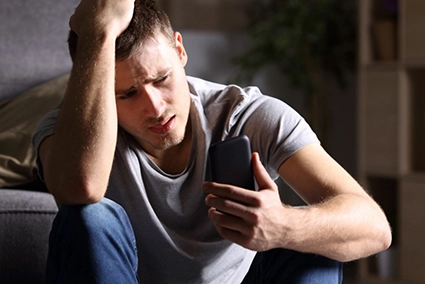
If you or your child suffered any of the following injuries after prolonged or compulsive social media use, you may qualify for a potential claim:
- Suicide attempt
- Self-harm
- Psychiatric hospitalization
- Diagnosed depression
- Diagnosed anxiety
- Body dysmorphic disorder
- Eating disorder
- Ongoing psychiatric treatment
- Prescription medications for mental health symptoms
- School decline
- Social withdrawal
- Sleep disruption
- Other serious functional decline connected to social media addiction
Please complete the form below so our office can confidentially review whether your situation may meet the current case criteria.
If this is an emergency or someone is in immediate danger, call 911 or contact the 988 Suicide & Crisis Lifeline now.
Helping Families Seek Accountability for Social Media Addiction, Self-Harm, and Mental Health Injuries
Social media has become part of daily life for children and teenagers, but for some families, constant platform use has turned into something far more serious. Parents have watched their children become unable to stop scrolling, lose sleep, withdraw from school and friends, experience anxiety when separated from their phones, and spiral into depression, eating disorders, self-harm, or psychiatric crisis.
At Leandros A. Vrionedes, P.C., we are reviewing potential claims involving social media addiction and serious mental health injuries linked to platforms such as Instagram, TikTok, Snapchat, YouTube, and other social media apps. These cases focus on allegations that major technology companies designed their platforms to keep young users engaged, despite the risks that compulsive use and harmful content exposure can pose to children and adolescents.
If your child or loved one developed serious mental health problems after prolonged social media use, you may have legal options. Contact Leandros A. Vrionedes, P.C. for a free and confidential consultation.
Social Media Addiction Claims Involving Children and Teenagers
Strong social media addiction cases often involve a child or teenager who began using social media at a young age. Claims are especially important when the child started using platforms before age 16, and even more concerning when use began before age 13. Families may also have stronger claims when the child used multiple platforms over several years, particularly where daily screen time reached three to four hours or more.
These cases are not simply about a young person spending too much time online. They involve patterns of compulsive use that continued despite clear harm. Parents may have seen failed attempts to reduce usage, nighttime use, anxiety when the child could not access social media, declining grades, sleep disruption, social withdrawal, or increasing conflict at home.
Many families tried to intervene. They limited phone access, removed apps, set parental controls, monitored accounts, or imposed screen time restrictions. Yet some children found ways around those safeguards or continued returning to platforms because the pull felt overwhelming. That pattern can matter when evaluating whether social media use became compulsive and damaging.
Mental Health Injuries Linked to Social Media Use
Potential claims are strongest when social media addiction is connected to documented mental health injuries. These injuries may include depression, anxiety, body dysmorphic disorder, eating disorders, self-harm, suicidal thoughts, suicide attempts, or psychiatric hospitalization. Ongoing therapy, psychiatric treatment, prescription medication, and school-related decline can also be important evidence.
For parents, the signs may have appeared gradually. A child who once did well in school may have stopped turning in assignments. A teenager who had friends and activities may have become isolated. Sleep patterns may have changed dramatically. The child may have become fixated on body image, appearance, popularity, online feedback, or harmful content recommended by platform algorithms.
Families should not assume they have no claim because their child had some prior anxiety, sadness, or emotional difficulty. What matters is whether social media use appears to have caused new symptoms, worsened an existing condition, or intensified mental health problems in a measurable way. Medical records, school records, therapy notes, parent observations, and screen time history can help tell that story.
How Social Media Platforms May Be Connected to Harm
Social media addiction claims focus on the design and operation of the platforms. Families may have noticed endless scrolling, autoplay, constant notifications, algorithmic recommendations, appearance-based content, self-harm content, eating disorder content, or emotionally intense material that seemed to keep the child engaged for longer periods.
The timing matters. A case may be stronger when symptoms began after increased social media use, worsened during periods of heavy use, or became more severe after exposure to harmful content. It can also matter when parents saw a connection between the child’s mood and platform activity, such as distress after using certain apps, anxiety when unable to access them, or nighttime use that interfered with sleep and school functioning.
These claims are developing across the country as families, school districts, and government entities challenge the conduct of major social media companies. The U.S. Surgeon General has described youth social media and mental health as an urgent public health issue, and current litigation includes allegations that platform design contributed to compulsive use and mental health harm among minors.
Who May Have a Potential Social Media Addiction Claim
You may want to speak with an attorney if your child began using social media as a minor, used multiple platforms for at least a year or two, spent several hours per day on social media, and later developed serious mental health symptoms. Claims are particularly important where there was self-harm, a suicide attempt, psychiatric hospitalization, a diagnosed mental health condition, ongoing treatment, prescription medication, or a clear decline in school, sleep, or relationships.
A claim may be more difficult if the person’s social media use began only in adulthood, usage was minimal, the period of use was very short, or there is no diagnosis, treatment, or documented worsening. Even so, families are often unsure how to evaluate what happened. A confidential consultation can help determine whether the facts meet current case criteria.
Evidence That Can Help Your Case
Families do not need to have every record before calling. Still, certain information can help an attorney evaluate the claim more quickly. Helpful records may include medical and psychiatric records, therapy records, school records, screen time data, app usage history, account information, parent statements, prescription records, and documentation showing efforts to reduce or control social media use.
Parents should also preserve screenshots, app histories, emails, text messages, journal entries, disciplinary records, hospitalization paperwork, and any available records showing the child’s use of Instagram, TikTok, Snapchat, YouTube, or similar platforms. The more clearly the records show timing, usage, injury, treatment, and changes in behavior, the stronger the case evaluation can be.
Why Families Should Act Promptly
Social media addiction cases require careful factual development. Screen time data can disappear. App histories can become harder to retrieve. Medical and school records take time to collect. Memories fade, especially when parents are trying to reconstruct months or years of changes in a child’s behavior.
Early legal guidance can help families understand what information matters, what records to preserve, and whether the facts support a potential claim. Leandros A. Vrionedes, P.C. reviews these matters with care, compassion, and attention to the serious impact these injuries can have on children and families.
Contact Leandros A. Vrionedes
If your child or loved one suffered depression, anxiety, self-harm, an eating disorder, psychiatric hospitalization, or another serious mental health injury after prolonged social media use, contact Leandros A. Vrionedes, P.C. today. The consultation is free and confidential, and you pay no fee unless we obtain a settlement or verdict on your behalf.
Submit your case online to speak with a New York social media addiction lawyer about your family’s potential claim.